COST & EFFICIENCY
Why a Remote Work Staffing Agency is Key to Cost-Effective Growth
🕑 6 min read 💼 Financial Strategy

In today’s rapidly evolving workforce landscape, businesses face the challenge of maintaining growth while managing costs effectively. A remote work staffing agency plays a critical role in facilitating this balance by providing access to a global talent pool. This article delves into the benefits of remote hiring solutions, the primary cost savings associated with utilizing a remote staffing agency, and how these agencies simplify the hiring process. As remote work becomes increasingly vital, businesses must understand how to leverage these services to enhance productivity and reduce operational expenses. By the end of this article, readers will gain insights into industry trends, the steps to optimize remote hiring, and the financial advantages that remote staffing can offer.
Benefits of Remote Hiring Solutions

Remote hiring solutions bring a multitude of advantages for businesses looking to expand their capabilities while keeping costs in check. By accessing a diverse global talent pool, companies can find specialized skills that meet their unique needs.
- Access to Global Talent: Remote work enables businesses to tap into a worldwide market, attracting top talent from different regions. This global perspective can enhance creativity and innovation within teams.
- Flexibility and Scalability: Remote staffing provides the flexibility to scale teams up or down based on project needs. This adaptability allows businesses to handle fluctuating workloads more efficiently.
- Focus on Core Functions: By outsourcing certain roles to remote employees, companies can concentrate on their primary objectives and enhance overall productivity. This focus can lead to improved service delivery and client satisfaction.
Radar Hire LLC embraces these benefits, offering tailored staffing solutions that align with business goals.
Primary Cost Savings
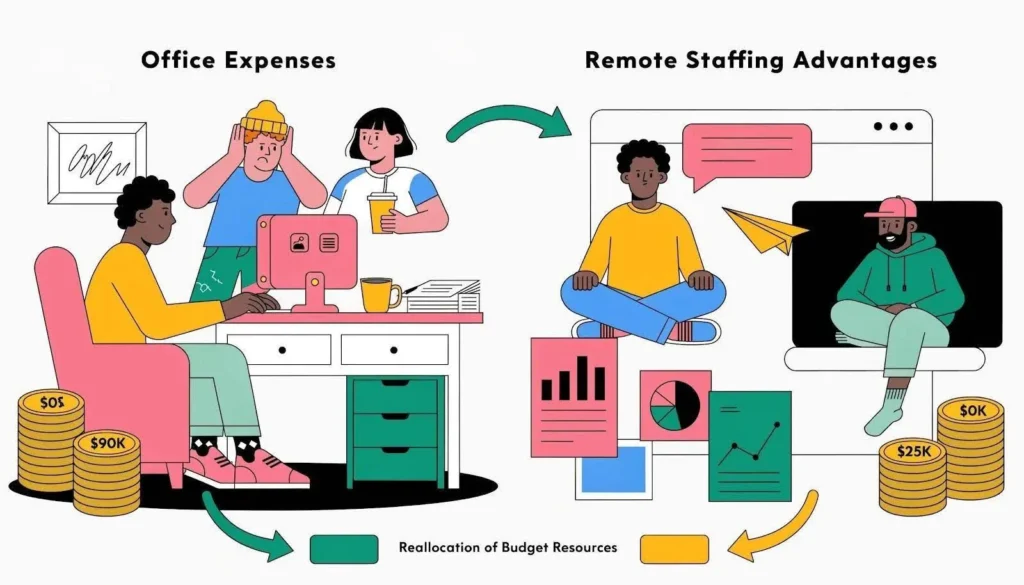
Utilizing remote staffing agencies can lead to substantial cost savings compared to traditional hiring methods. Companies looking to tighten budgets can greatly benefit from this strategic approach.
- Reduced Overhead Expenses: Remote employees often eliminate the need for large office spaces and reduce utility costs, contributing directly to the bottom line.
- Specialized Skills at Lower Rates: Hiring globally means businesses can find skilled professionals at competitive rates, which might be lower than local talent, allowing for budget reallocation to other key areas.
Here’s a table summarizing the cost-saving aspects associated with remote staffing versus in-house hiring.
Cost Aspect
Remote Staffing
Traditional Staffing
Office Space
Eliminated
Required
Overhead Costs
Reduced
High
Compensation
Competitive
Market Rate
These figures illustrate the financial benefits of hiring remote employees, providing a robust foundation for cost-effective growth strategies.
Operational and Overhead Expense Reduction
Establishing a remote workforce significantly contributes to reducing operational and overhead costs. This reduction is particularly important in today’s competitive landscape where efficiency is paramount. This is exactly why many growing businesses choose to hire virtual assistant for handling administrative tasks efficiently.
- Lower Operational Costs: With remote teams, businesses can operate without the substantial expenses associated with physical locations, such as rent and supplies.
- Streamlined Processes: Remote work often leads to more efficient workflows, since digital tools enable seamless collaboration and communication.
The transition to remote work can thus lead to a notable decrease in operational expenditures while enhancing team productivity.
Industries Benefiting Most
Several sectors are particularly well-suited for remote staffing solutions, demonstrating the versatility and adaptability of this approach.
- IT: The tech industry thrives on remote talent, allowing companies to find specialists in software development and cybersecurity without geographical limitations.
- Digital Marketing: Professionals in digital marketing can effectively work from any location, engaging with clients and teams globally.
- Customer Service: Many businesses have transitioned their customer support functions to remote teams, achieving significant cost savings and improved service flexibility.
Understanding which industries can excel through remote staffing can guide businesses in leveraging these solutions for their unique needs.
Simplifying and Optimizing the Hiring Process
A remote work staffing agency simplifies and optimizes the hiring process through structured methodologies that enhance efficiency.
- Structured Hiring Process: Utilizing proven frameworks, staffing agencies streamline the recruitment to ensure candidates are well-matched to roles without the hiring team becoming overwhelmed.
- Pre-Vetted Candidates: Staffing agencies often present pre-screened candidates, saving businesses time and reducing the risk of hiring errors.
Radar Hire LLC implements these strategies to ensure that clients can focus on their core operations while benefiting from expert recruitment practices.
Step-by-Step Procedures for Remote Talent Sourcing and Vetting
To effectively tap into the remote workforce, agencies employ a series of steps designed to ensure successful matches.
- Define Hiring Needs: Clear articulation of job requirements and desired skills is essential.
- Candidate Sourcing: Agencies utilize various platforms to attract a diverse pool of candidates, ensuring broad access to top talent.
- Vetting Processes: Comprehensive screening of resumes, interviews, and skill assessments are conducted to select the most suitable candidates.
This structured process enhances the quality of hires and optimizes the time spent on recruitment, positioning businesses for success.
Onboarding Process and Its Significance
The onboarding process is pivotal in ensuring remote employees are well-integrated into their roles.
- Integration of New Hires: Effective onboarding programs facilitate new hires’ understanding of company culture and expectations, leading to quicker adaptation.
- Documentation and Training: Proper documentation ensures compliance, while training equips employees with the necessary knowledge and skills.
Establishing a robust onboarding protocol is essential for maximizing the productivity of remote teams from the outset.
How Can Businesses Effectively Manage Remote Teams to Maximize Productivity?
Managing a remote workforce effectively involves implementing best practices that foster collaboration and accountability.
- Regular Communication: Maintaining consistent communication through updates and feedback mechanisms helps to keep teams aligned and motivated.
- Using Technology: Scheduling tools, project management software, and communication platforms enhance collaboration and facilitate smooth workflows.
These practices ensure that remote teams operate efficiently, contributing to overall business goals.
What Remote Workforce Management Practices Drive Consistent Results?
Identifying effective management practices is crucial for driving consistent results within remote teams.
- Performance Tracking: Utilizing metrics to evaluate employee performance helps in understanding productivity levels and areas for improvement.
- Regular Check-Ins: Scheduling periodic meetings allows managers to engage with team members and see how projects are progressing.
These management strategies can lead to sustained productivity and a motivated workforce.
Which Technologies and Tools Support Seamless Distributed Team Collaboration?
To support remote teams, various technologies and tools are available that enhance collaboration.
- Project Management Tools: Software such as Asana or Trello allows teams to track tasks and deadlines efficiently.
- Communication Software: Platforms like Slack and Microsoft Teams facilitate real-time dialogue, making collaboration more streamlined.
By leveraging these tools, companies can ensure that their remote teams remain connected and effective in their roles.
What Are the Common Challenges in Remote Staffing and How Can Agencies Provide Solutions?
Remote staffing presents unique opportunities, and experienced agencies provide the structure and support needed for long-term success.
- Consistent Quality Through Proven Processes: Remote staffing agencies maintain high quality standards through comprehensive vetting, structured oversight, and ongoing performance support.
- Effective Communication Across Teams: Time zone alignment, clear communication practices, and collaborative workflows help distributed teams stay connected, productive, and engaged.
Recognizing these opportunities and applying proven best practices helps organizations build stronger teams, improve collaboration, and achieve sustainable business growth.
What Risks Arise When Hiring Remote Employees and How Are They Mitigated?
Remote hiring offers numerous benefits, and experienced staffing agencies provide the processes and support needed to help businesses build secure, connected, and successful remote teams.
- Strong Data Security Practices: Remote staffing agencies implement comprehensive security protocols, onboarding guidance, and best practices that help protect sensitive business information.
- Building Engaged Remote Teams: Agencies foster collaboration, cultural alignment, and ongoing team integration to create an engaging work environment that supports long-term success and employee satisfaction.
By applying these best practices, businesses can build confident, productive, and high-performing remote teams while supporting sustainable growth.
How Does Expertise in Remote Workforce Compliance Benefit Clients?
Compliance with local laws and regulations is critical when hiring remote employees.
- Adhering to Local Laws: Agencies possess the knowledge required to navigate varying legal frameworks, ensuring that businesses remain compliant.
- Quality Control: Strong compliance foundations translate to higher quality work and reliable teams.
This expertise provides businesses with peace of mind, allowing them to focus on core operations.
How Does Cost Comparison Between Remote Staffing and Traditional Hiring Validate Economic Benefits?
When comparing remote staffing to traditional hiring, the financial and operational benefits become abundantly clear.
- Cost Efficiency: Overall, remote hiring reduces expenses related to office space and employee turnover, leading to long-term savings.
- Long-Term Savings: Many businesses experience a robust return on investment, especially as remote teams contribute to higher productivity levels.
What Are the Quantifiable Savings Showcased in Case Studies?
Numerous case studies illustrate substantial financial benefits realized through remote hiring solutions.
Case Study
Savings
Cost Reductions
Company A
$100,000
Reduced overhead by 30%
Company B
$50,000
Lowered operational expenses by 25%
These case studies emphasize the tangible benefits of engaging remote staffing agencies over traditional hiring practices.
How Do Tables and Diagrams Illustrate Remote Hiring Financial Advantages?
Visual aids can effectively convey the economic advantages of remote hiring, enabling stakeholders to grasp the concepts quickly.
- Visual Representation: Graphs showing cost comparison between remote and on-site staffing can highlight the financial advantages intuitively.
- Comparative Metrics: Tables summarizing key data points offer quick insights, facilitating informed decision-making.
Visual representations enhance the understanding of remote staffing’s value proposition.
Why Should Businesses Choose Radar Hire LLC as Their Remote Staffing Partner?
Choosing a knowledgeable partner like Radar Hire LLC can significantly enhance a business’s remote hiring strategy.
- Access to Elite Talent: With a strong focus on sourcing high-quality talent, Radar Hire connects clients with skilled professionals across multiple fields.
- Cost Savings: Their established processes enable businesses to save valuable resources while securing talented employees.
Clients benefit from the tailored services and expertise that Radar Hire provides, ensuring a smooth transition to remote staffing solutions.
What Unique Value Propositions Distinguish Radar Hire’s Remote Staffing Solutions?
Radar Hire’s unique offerings set it apart in the competitive landscape of remote staffing agencies.
- Streamlined Hiring Process: Their structured approach to recruitment shortens the time from need identification to hire.
- Commitment to Professionalism: Radar Hire emphasizes transparency and reliability in all its dealings, building long-lasting relationships with clients.
These advantages help businesses navigate the complexities of hiring remotely while achieving their growth objectives.
How Have Clients Achieved Cost-Effective Growth Through Radar Hire’s Services?
Clients have successfully utilized Radar Hire’s services to achieve significant financial and operational growth.
- Success Metrics: Many clients report enhanced productivity and lower hiring costs, yielding measurable ROI.
- Cost Efficiency: The expertise provided leads to effective employee integration, which translates into better performance.
These success stories underline the tangible benefits of partnering with a dedicated remote staffing agency like Radar Hire.