
Nearshore Staffing
The USMCA Advantage: Outsourcing to Mexico Offers Superior IP Protection for U.S. Firms
🕑 11 min read 💻 Nearshore staffing
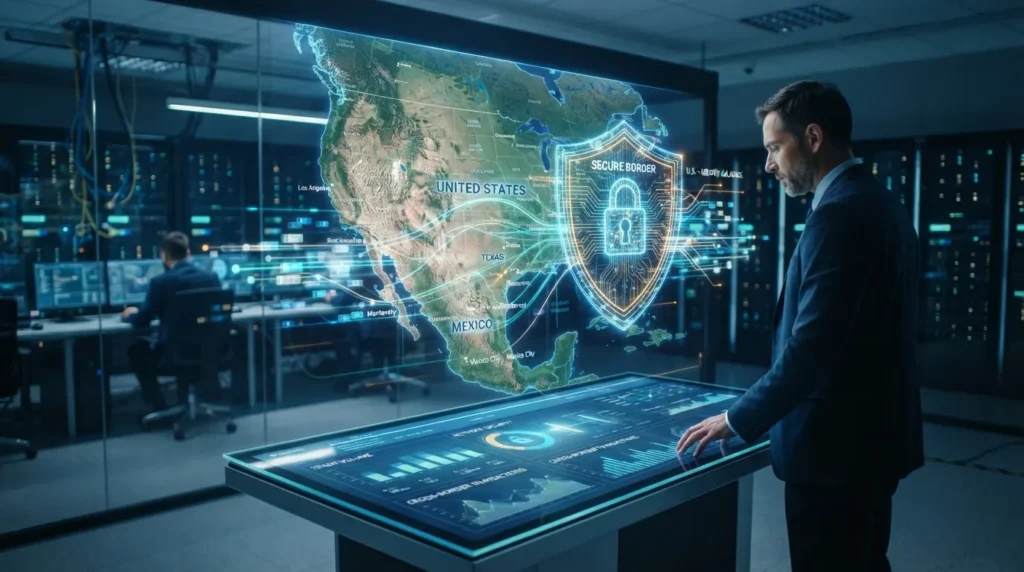
For executive leadership in technology, fintech, healthcare, and financial services, the strategic benefits of nearshoring are well-known: real-time time zone alignment, cultural affinity, and 50% to 65% labor cost optimization.
However, when scaling technical and operational teams across international borders, chief legal officers, CTOs, and compliance executives face a paramount concern that often stalls global initiatives: How do we safeguard proprietary source code, client financial data, and core intellectual property (IP)?
Historically, nearshore expansion to USMCA-aligned regions like Mexico has provided a far more streamlined and secure legal framework compared to distant offshore jurisdictions. While enforcing U.S. Non-Disclosure Agreements (NDAs) overseas can sometimes be complex, the USMCA provides a highly efficient, cost-effective framework for robust cross-border IP protection.
This is why forward-thinking U.S. enterprises are shifting their talent strategy toward outsourcing to Mexico.
Under the United States-Mexico-Canada Agreement (USMCA), Mexico offers one of the most robust, enforceable, and comprehensive intellectual property protection frameworks in the world.
In this guide, we break down the legal mechanics of the USMCA, contrast nearshore legal safeguards with Asian jurisdictions, and reveal why Mexico has become the premier nearshore destination for security-conscious tech and finance firms.
Executive Summary: The Legal & Security Edge
- The Jurisdictional Advantage: Unlike some traditional offshore destinations, USMCA-backed regions offer tech and fintech firms a highly secure legal system where U.S. IP judgments are reliably and swiftly enforced.
- The USMCA Shield: The USMCA establishes strict, treaty-backed protections for trade secrets, civil and criminal penalties for IP misappropriation, and streamlined cross-border legal enforceability between the U.S. and Mexico.
- The Strategic Advantage: When outsourcing to Mexico, companies gain the operational agility and cost benefits of global talent without compromising enterprise-grade data security or legal recourse.
The Legal Blind Spot: Why Traditional Offshore Sourcing Poses IP Risk
While standard U.S. NDAs may face limitations in traditional offshore markets, partnering within the USMCA framework ensures your employment agreements provide robust, internationally recognized protection.
In reality, international IP enforcement is dictated by local jurisdiction and bilateral treaties:
TRADITIONAL OFFSHORE LEGAL ENVIRONMENT (High Exposure):
Contract Signed → IP Data Leak → Non-Enforceable Foreign Court → Multi-Year Legal Stalemate
USMCA-BACKED MEXICO ENVIRONMENT (Institutional Protection):
Bilateral Treaty → Direct Trade Secret Protection → Criminal & Civil Recourse → 100% IP Enforceability
3 Major IP Vulnerabilities in Distant Offshore Markets:t
- Lack of Reciprocal Enforcement: Many Asian jurisdictions do not readily recognize or enforce U.S. civil court judgments, requiring companies to relitigate entire cases from scratch in foreign courts under unfamiliar legal procedures.
- Strong Trade Secret Remedies: Under the USMCA, companies benefit from rapid injunctive relief, ensuring swift court orders to protect proprietary code and maintain a strong competitive advantage.
- Data Sovereignty Alignment: The USMCA framework seamlessly aligns with strict U.S. regulatory standards (including SOC 2, HIPAA, FINRA, and SEC regulations), simplifying compliance and streamlining your audit processes.
4 Ways the USMCA Protects U.S. Firms Outsourcing to Mexico
When the USMCA superseded NAFTA, it introduced Chapter 20 (Intellectual Property Rights)-specifically designed to modernize trade protections for the digital economy, cloud computing, and proprietary software.
Here is how the USMCA protects U.S. companies that choose outsourcing to Mexico:
1. Robust and Specific Trade Secret Protections (Article 20.71)
The USMCA includes comprehensive definitions of trade secrets that directly mirror U.S. standards (including the Defend Trade Secrets Act). It explicitly criminalizes the unauthorized disclosure, acquisition, or use of proprietary source code, algorithms, and confidential financial datasets.
2. Immediate Injunctive Relief and Asset Seizure
Under USMCA provisions, Mexican courts are legally empowered to issue preliminary injunctions and order the rapid seizure of equipment or digital storage devices used in suspected IP misappropriation. This prevents unauthorized code from being distributed or utilized while legal proceedings are underway.
3. Protection Against Government Disclosure of Source Code
The USMCA contains express prohibitions preventing government bodies or local regulatory agencies from demanding access to proprietary source code or algorithms as a condition of doing business or hiring locally.
4. Direct Recognition of Modern Digital Workflows
The agreement establishes strict enforcement mechanisms for digital copyright management, encrypted data transfers, and electronic signatures-ensuring that digital contracts and remote employment NDAs carry full legal validity.
Comparative Matrix: Outsourcing to Mexico vs. Traditional Offshore Hubs
Legal & Security Dimension
Traditional Asian Offshore Hubs
Outsourcing to Mexico (USMCA)
Governing Trade Treaty
Relies on non-standard bilateral agreements
USMCA (Binding trilateral framework with the U.S.)
Trade Secret Legislation
Varies significantly by local jurisdiction
Harmonized directly with U.S. Trade Secret Laws
Injunctive Relief Speed
Often requires extended legal processes
Fast, treaty-mandated emergency court remedies
Source Code Protection
Lacks explicit cross-border protections
Explicit protections prohibiting source code seizure
Geographic & Legal Proximity
Geographically distant with distinct legal traditions
Direct geographic neighbor; strong cross-border legal cooperation
Compliance Alignment
Requires specialized auditing for U.S. compliance
Seamless integration with U.S. regulatory frameworks
Why Tech and Finance Companies Are Leading the Nearshore Migration

High-stakes industries with strict regulatory oversight cannot afford “trust-based” offshore relationships. Mexico’s combination of technical talent, geographic proximity, and legal certainty makes it the top choice for:
1. Fintech and Banking Platforms
- Sensitive Assets: Consumer PII, payment gateways, automated trading algorithms, banking integration APIs.
- Why Mexico: Full compliance with cross-border data transfer protocols and immediate alignment with U.S. financial security mandates.
2. Proprietary SaaS and Enterprise Software
- Sensitive Assets: Core application codebases, proprietary AI/ML model architectures, vector embeddings, customer databases.
- Why Mexico: Source code protection under USMCA Chapter 20 eliminates the threat of intellectual property leakage to domestic competitors.
3. Legal and Healthcare Technology
- Sensitive Assets: Attorney-client privileged documentation, Electronic Health Records (EHR), HIPAA-governed medical records.
- Why Mexico: Secure, auditable infrastructure supported by enforceable Non-Disclosure Agreements and Employer of Record (EOR) governance.
How RadarHire Secures Your Nearshore Operations in Mexico
At RadarHire, we believe that cost-effective scaling should never introduce legal exposure. When you partner with us for outsourcing to Mexico, we layer institutional compliance, legal protection, and technical security on top of top-tier talent acquisition.
The RadarHire Mexico Security Framework:
- Ironclad Bilateral IP Contracts: We enforce customized NDAs and comprehensive IP Assignment agreements that are 100% legally binding under both U.S. law and the USMCA Mexican legal framework.
- Top 1% Engineering & Finance Talent: Rigorous multi-stage vetting testing technical competence, English proficiency, and professional background verification.
- Turnkey EOR Compliance: We manage Mexican labor laws (LFT), social security (IMSS), tax withholdings, and mandatory benefits-eliminating co-employment risks.
- Zero-Trust Infrastructure Integration: We assist with device security, VPN protocols, and access management (LastPass/Okta) so nearshore staff work securely within your established IT parameters.
- Real-Time Collaboration: Your team works in your exact U.S. time zones (EST, CST, MST, PST) for seamless daily standups and live code reviews.
Frequently Asked Questions (FAQs)
How does the USMCA protect intellectual property when outsourcing to Mexico?
The USMCA establishes harmonized trade secret definitions, criminal and civil penalties for IP theft, swift injunctive court remedies, and strict protections against government demands for proprietary source code-providing legal parity with U.S. intellectual property standards.
Is an NDA signed with a Mexican remote professional enforceable in the U.S.?
Yes, when executed through a compliant staffing model or Employer of Record (EOR) like RadarHire, employment contracts, NDAs, and IP assignment clauses are structured to be fully enforceable under both Mexican labor law and U.S. jurisdictional standards.
Why is Mexico preferred over Asian markets for tech and finance outsourcing?
Beyond complete U.S. time zone alignment and cultural proximity, Mexico offers significantly stronger, treaty-backed IP enforcement under the USMCA, eliminating the legal ambiguities and enforcement delays common in Asian offshore jurisdictions.
Protect Your IP While Scaling with Radar Hire
Secure your proprietary technology, client data, and trade secrets by leveraging the robust, treaty-backed legal framework of the USMCA. Partner with RadarHire to build a high-performing nearshore team in Mexico protected by the full power of the USMCA.