
Remote Staffing
Evolution of the Remote Staffing Agency: From Basic Admin to Elite Tech and AI Talent
🕑 12 min read 💻 Remote Staffing

A decade ago, the phrase “remote staffing” occupied a very specific, limited box in the minds of corporate executives.
In 2014, when a founder or business owner considered engaging a remote staffing agency, the goal was almost universally transactional: finding low-cost offshore labor to handle basic data entry, transcribe meeting recordings, organize messy spreadsheets, or clear out overflowing customer support queues. The value proposition was strictly built around labor cost arbitrage.
However, over the past ten years—accelerated by cloud-native infrastructure, the maturation of international engineering hubs, and the explosion of generative AI—the global workforce has undergone a complete paradigm shift.
Today, viewing remote staffing as a tool solely for basic administrative support is like viewing a smartphone as a tool solely for sending text messages.
The modern remote staffing agency is no longer a clearinghouse for cheap virtual assistants. Today, premium agencies like Radar Hire have evolved into elite technical scouting networks where high-growth U.S. enterprises, venture-backed startups, and mid-market innovators go to source mission-critical talent: Revenue Operations (RevOps) Architects, Machine Learning (ML) Engineers, and elite UI/UX Designers.
In this guide, we break down the decade-long evolution of remote staffing, explore how global talent pools matured, and reveal why today’s most ambitious companies build their core technical advantage through modern staffing partners.
Executive Summary: The Decade-Long Transformation
- The Legacy Paradigm (2014–2019): Remote staffing was synonymous with entry-level administrative assistance, low-touch call centers, and basic task execution.
- The Modern Paradigm (2024–Present): A specialized remote staffing agency sources the top 1% of global professionals who design scalable system architectures, fine-tune proprietary LLMs, build high-converting conversion funnels, and lead operational divisions.
- The Business Impact: U.S. organizations secure elite, domain-specific technical leadership in overlapping U.S. time zones (EST, CST, MST, PST) at 50% to 65% cost savings compared to hyper-inflated domestic tech hubs.
The 10-Year Evolution: How Global Staffing Reached the Frontier

The transition from transactional virtual assistance to frontier technical staffing was driven by three structural transformations in the global economy:
THE EVOLUTIONARY TIMELINE OF REMOTE STAFFING:
| 2014: Era of Task Arbitrage ] -> Low-cost virtual assistants, manual data entry, basic spreadsheets.
|
v
[ 2019: Era of Functional Outsourcing ] -> Full-stack web developers, digital marketers, B2B sales reps.
|
v
[ 2026+: Era of Frontier Technical Staffing ] -> ML/AI Engineers, RevOps Architects, UI/UX System Designers.
THE VALUE CURVE SHIFT:
Legacy Remote Staffing: [ Task Execution ] -> Output: “Checklist Completed”
Modern Radar Hire Model: [ Strategic Leadership ] -> Output: “Enterprise Infrastructure Scaled”
1. The Global Expansion of Big Tech Engineering
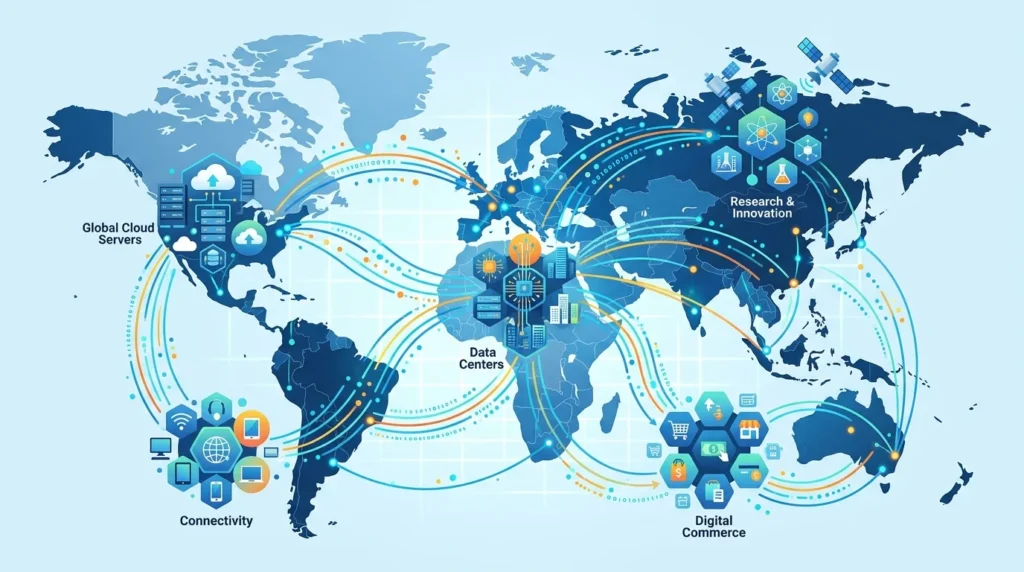
Over the last decade, technology giants like Google, Meta, Microsoft, Uber, and Amazon built massive engineering centers across Latin America (São Paulo, Guadalajara), South Africa (Cape Town), and Eastern Europe. This trained a generation of international engineers in enterprise-grade distributed systems, scalable microservices, and modern product development.
2. The Rise of Borderless Toolstacks & Asynchronous Culture
The widespread adoption of cloud infrastructure (AWS/GCP), collaborative design tools (Figma), modern project trackers (Linear/Notion), and real-time communication (Slack/Zoom) eliminated the physical office as a requirement for high-level creative and engineering collaboration.
3. The Artificial Intelligence Revolution
With the arrival of generative AI, basic manual data entry has become automated. Modern global talent has adapted by mastering high-leverage technical disciplines: prompt engineering, retrieval-augmented generation (RAG), MLOps, and algorithmic data modeling.
3 Elite High-Impact Roles Redefining Modern Remote Staffing
When high-growth companies partner with Radar Hire today, they aren’t looking for junior assistants. They are deploying senior technical and revenue leaders across three core domains:
HIGH-IMPACT ROLES SOURCED THROUGH MODERN REMOTE STAFFING:
|– 1. Machine Learning & Frontier AI Engineers (LLMs, Vector DBs, PyTorch, MLOps)
|– 2. Revenue Operations (RevOps) Architects (HubSpot/Salesforce automation, lifecycle data)
|– 3. Senior UI/UX & Design System Architects (Figma design systems, micro-interactions, CRO)
1. Machine Learning & Frontier AI Engineers
- The Shift: Ten years ago, tech firms looked overseas for basic PHP or WordPress maintenance. Today, firms use remote staffing partners to recruit specialized AI engineers.
- What They Build: Fine-tuning open-source LLMs (Llama, Mistral), designing vector search pipelines (Pinecone, Qdrant), deploying custom agentic workflows, and monitoring production model drift in AWS SageMaker.
- The Strategic ROI: Deploys cutting-edge AI features onto your product roadmap in days rather than waiting 90+ days to compete for scarce domestic AI researchers in Silicon Valley.
2. Revenue Operations (RevOps) & Go-to-Market Architects
- The Shift: Instead of hiring basic data-entry clerks to copy-paste leads, modern firms hire RevOps architects who own the entire customer acquisition tech stack.
- What They Build: Structuring multi-touch attribution models in HubSpot/Salesforce, automating lead routing pipelines via Zapier/Make, and auditing customer lifecycle metrics (LTV, CAC, churn) in Looker Studio.
- Synchronous nearshore collaboration empowers teams to resolve complex technical challenges instantly, enabling real-time agile velocity and highly efficient sprint execution.
3. Senior UI/UX & Product Design System Architects
- The Shift: Moving beyond basic graphic design and banner creation to senior product designers who craft enterprise software experiences.
- What They Build: Building comprehensive design systems in Figma, conducting user journey testing, architecting intuitive mobile app interfaces (iOS/Android), and optimizing checkout conversion funnels.
- The Strategic ROI: Elevates your product’s visual polish and usability to enterprise standards, directly boosting customer activation and retention rates.
Side-by-Side Comparison: The Old Way vs. The Modern Remote Staffing Agency
Operational Dimension
The 2014 Remote Staffing Agency (The Old Way)
The Modern Remote Staffing Agency (Radar Hire)
Primary Talent Tier
Entry-level task clerks & generalist VAs
Top 1% Senior Engineers, Designers & RevOps Leads
Problem-Solving Style
Reactive; strictly follows step-by-step SOPs
Autonomous; architects systems and drives strategy
Technical Stack
MS Word, basic Excel, data entry tools
PyTorch, Figma, HubSpot, LangChain, React, AWS
Communication Profile
Script-dependent; often siloed
Proactive; participates in live Agile stand-ups on Zoom
Time-Zone Alignment
Often asynchronous (12-hour offset)
100% Aligned to U.S. business hours (EST, CST, PST)
Legal & Compliance
Unregulated gig contracts (High misclassification risk)
Turnkey Employer of Record (EOR) legal shield
Strategic Objective
Short-term labor cost cutting
Accelerating product velocity and enterprise value
What to Look for in a Modern Technical Staffing Partner
If your company is evaluating a remote staffing agency to source high-level technical or growth talent, verify that the agency has evolved beyond traditional keyword matching.
A modern agency must possess four institutional capabilities:
THE Radar Hire TECHNICAL EVALUATION FRAMEWORK:
|– 1. Live Proctored Technical Challenges (Live coding, system architecture defense)
|– 2. Design & Framework Audits (Figma component inspection, commit-history reviews)
|– 3. U.S. Business & Agile Fluency (Testing assertiveness, flat-hierarchy communication)
|– 4. Enterprise Data Security Hygiene (Zero-Trust access, bilateral NDAs, IP Assignment)
1. Architecture-Level Technical Audits
The agency’s evaluators must be experienced software architects who test candidates on system scalability, concurrency, and memory management—not just multiple-choice quizzes.
2. Commit-History & Portfolio Verification
Rigorous auditing of GitHub repositories and Figma design files to eliminate AI-fabricated portfolios and ensure genuine project authorship.
3. Turnkey EOR and Legal Protection
The agency must operate as the official Employer of Record (EOR), managing all international employment contracts, local statutory benefits, and tax compliance to shield your U.S. entity from liability.
Redefine Your Talent Strategy with Radar Hire
At Radar Hire, we are leading the modern evolution of global talent. We don’t place generic virtual assistants; we partner with forward-thinking U.S. technology companies, digital platforms, and agencies to place the top 1% of international technical, revenue, and creative leaders.
The Radar Hire Standard:
- Top 1% Global Curation: Rigorous multi-stage assessments evaluating deep technical architecture, algorithmic problem-solving, UI/UX systems design, and native-level English fluency.
- 100% Time-Zone Synchronization: Talent works during your exact operating schedule (EST, CST, MST, PST) for live Slack collaboration, daily stand-ups, and real-time pair-programming.
- Turnkey EOR & Legal Compliance: We handle international contracts, local labor laws, statutory benefits, and cross-border payroll with zero administrative overhead.
- 50% to 65% Cost Optimization: Build a world-class, enterprise-grade technical department at a fraction of domestic Silicon Valley or New York compensation benchmarks.
Frequently Asked Questions (FAQs)
What is the difference between a traditional remote staffing agency and a modern agency like Radar Hire?
Traditional agencies focus on placing low-cost administrative workers for repetitive, entry-level tasks. A modern agency like Radar Hire specializes in placing senior, highly technical professionals—such as Machine Learning Engineers, RevOps Architects, full-stack developers, and UI/UX designers—who lead strategy and build complex systems.
Can remote engineers and designers collaborate in real time with our domestic U.S. team?
Yes. Radar Hire places talent from synchronized global hubs in Latin America, South Africa, and Southeast Asia that work dedicated U.S. business hours (EST, CST, MST, PST). They participate in live morning stand-ups, review Figma files and Pull Requests in real time, and collaborate seamlessly on Slack.
How does Radar Hire verify the skills of Machine Learning and AI engineers?
Candidates undergo live proctored coding sessions, live system architecture defenses, mathematical modeling assessments, and code commit audits evaluated by senior software architects before ever being presented to your leadership team.
Build Your Next-Generation Team with Radar Hire
Stop thinking of global hiring as a low-level administrative shortcut. Partner with Radar Hire—the premier modern remote staffing agency—to recruit top 1% Machine Learning Engineers, RevOps leaders, and UI/UX architects ready to scale your enterprise.