
Remote Staffing
Cybersecurity and Global Hiring: What Every US Firm Should Ask Their Remote Staffing Company
🕑 15 min read 💻 Remote staffing

As U.S. businesses increasingly leverage global talent pools to scale operations, cross-border hiring has become a strategic advantage for building agile, high-performing teams. Successful international workforce expansion is supported by strong cybersecurity practices, data compliance, and intellectual property protection.
For organizations in industries such as finance, fintech, legal services, healthtech, and software engineering, partnering with a remote staffing company that prioritizes enterprise-grade security, compliance, and information protection helps support confident, secure global hiring.
Rather than relying solely on individual contractors, a premium remote staffing company provides structured security processes, compliance standards, and organizational safeguards that strengthen workforce protection.
In this guide, we outline the five essential cybersecurity questions every U.S. organization should ask a remote staffing partner to support secure, compliant, and successful international hiring.
Executive Summary: Security in Global Hiring
- Secure Freelancer & Remote Workforce Management: Successful global hiring is supported by clear security policies, professionally managed devices, secure network practices, robust confidentiality agreements, and enterprise-grade access controls that help protect business data and intellectual property.
- The Remote Staffing Shield: A professional remote staffing partner implements multi-layered security-combining background integrity vetting, strict IP assignment contracts, encrypted credential management, and endpoint monitoring.
- Why Industry Matters: Financial services, legal practices, and SaaS companies cannot afford “trust-based” security; global hiring requires verifiable compliance and zero-trust operational protocols.
The Risk Gap: Random Freelancers vs. Managed Remote Staff
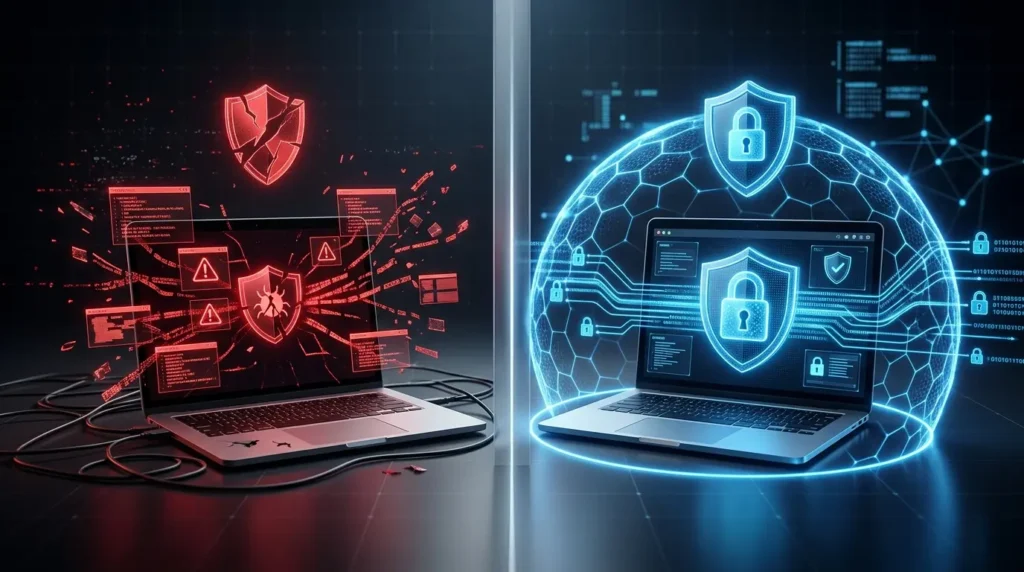
When hiring talent across borders, successful U.S. organizations strengthen security by combining enterprise-grade identity verification, secure credential management, and structured access controls with their global hiring processes.
- UNMANAGED FREELANCE MODEL (High Risk):
Unsecured Wi-Fi / Personal Laptop → Direct Plaintext Credentials → No Centralized Audit Trail - MANAGED REMOTE STAFFING MODEL (Enterprise Grade):
Identity Vetted | Encrypted SSO / Password Vault | Secure VPN/VDI Environment → Continuous Monitoring
5 Cybersecurity Questions to Ask Your Remote Staffing Company
Before embedding international talent into your core technical, financial, or operational workflows, ask your remote staffing partner the following five questions:
1. How Do You Vet Candidates for Integrity and Background Verification?
- Why It Matters: A strong combination of technical expertise, professional integrity, and verified credentials helps organizations build secure, reliable, and high-performing remote teams.
- What to Look For: Ensure your staffing partner conducts comprehensive identity verification, criminal background checks (where legally permissible), credential verification, and employment history audits. Premium firms also conduct behavioral screening to evaluate a candidate’s commitment to data hygiene and confidentiality.
2. How Are Legal Safeguards, NDAs, and IP Rights Enforced Internationally?
- Why It Matters: Strong international legal frameworks, well-structured NDAs, and comprehensive intellectual property agreements help organizations protect proprietary information, maintain compliance, and confidently manage global teams.
- What to Look For: A reputable remote staffing company utilizes localized employment structures or Employer of Record (EOR) frameworks. They ensure that ironclad Non-Disclosure Agreements (NDAs) and Intellectual Property (IP) Assignment Clauses are legally binding under both local laws and US jurisdiction, granting your business 100% ownership of all work product.
3. What Secure Access and Credential Protocols Are Required?
- Why It Matters: Secure credential management and controlled access protocols help organizations protect business systems, support regulatory compliance, and enable safe collaboration with remote teams.
- What to Look For: Confirm that the staffing firm enforces Zero-Trust Access protocols. Talent should access client infrastructure through secure credential management systems (such as LastPass, 1Password, or Okta SSO) and encrypted Virtual Private Networks (VPNs). Workers should never possess plain-text master passwords to core client systems.
4. How Is Endpoint Security and Device Infrastructure Managed?
- Why It Matters: Professionally managed devices and enterprise-grade endpoint security help organizations protect corporate systems, support secure remote work, and maintain consistent security standards across distributed teams.
- What to Look For: Ask whether the staffing partner provides hardware management options, Virtual Desktop Infrastructure (VDI), or Mobile Device Management (MDM) software. Key safeguards include mandatory full-disk encryption (BitLocker/FileVault), automated security patching, anti-malware protection, and restricted USB device access.
5. What Data Privacy and Compliance Standards Do You Adhere To?
- Why It Matters: If your firm handles sensitive customer data subject to SOC 2, GDPR, HIPAA, or FINRA regulations, external team members must operate strictly within those compliance boundaries.
- What to Look For: Your remote staffing partner should demonstrate clear protocols for data handling, clean-desk policies for sensitive roles, audit logging, and rapid incident response procedures in the rare event of a security anomaly.
Security Comparison: Freelance Platforms vs. Specialized Remote Staffing
Security & Compliance Dimension
Unmanaged Freelancer / Gig Platform
Specialized Remote Staffing Company
Identity & Integrity Vetting
Self-reported profiles, basic ID upload
Multi-stage background, criminal & reference checks
IP Protection & Enforceability
Generic marketplace terms of service
Custom, legally binding NDAs & global IP transfer contracts
Credential & Access Control
Uncontrolled (Direct password sharing)
Enforced SSO, Password Vaults (LastPass), & Zero-Trust VPNs
Device & Endpoint Security
Personal, unmonitored consumer devices
MDM-monitored workstations, VDI, or hardware provisions
Regulatory Compliance Alignment
No compliance oversight
Process alignment for SOC 2, HIPAA, GDPR, & FINRA environments
Offboarding Data Security
Manual/Trust-based access revocation
Immediate, automated credential revocation & access wipe
Industry-Specific Security Requirements
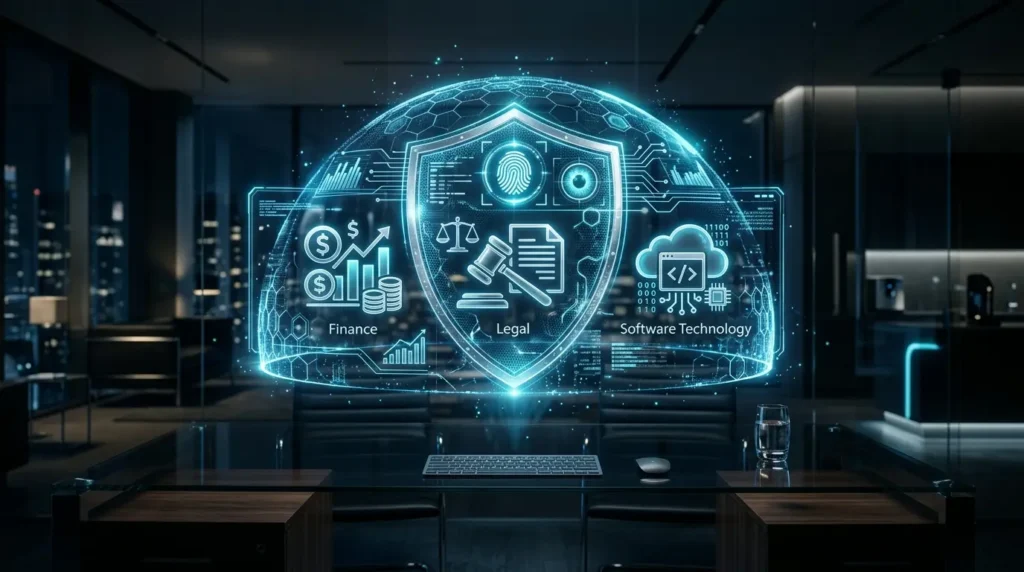
Different industries face distinct compliance and security requirements when scaling with offshore talent:
Finance & Fintech
- Key Risks: Unauthorized access to customer PII, banking records, or automated trading systems.
- Required Safeguards: Dual-factor authentication (2FA), clean-room environments, restricted local data downloads, and strict audit logging.
Legal & Professional Services
- Security Priorities: Protect attorney-client privilege, confidential litigation files, M&A documentation, and other sensitive legal information through comprehensive confidentiality and access controls.
- Required Safeguards: Enforceable multi-jurisdictional NDAs, role-based document access, and encrypted file transfer channels.
Software & Technology (SaaS)
- Security Priorities: Protect source code, software repositories, and infrastructure configurations through secure access management, encryption, and enterprise-grade development environments.
- Required Safeguards: Least-privilege Git access, secure staging environments, and mandatory hardware-level encryption.
How RadarHire Protects Your Data and Intellectual Property
At RadarHire, we believe that global talent expansion should never require compromising on corporate cybersecurity. As a trusted remote staffing company, we embed enterprise-grade security protocols directly into our talent placement framework.
The RadarHire Security Standard:
- Rigorous Identity & Integrity Screening: Every candidate undergoes comprehensive identity verification, background screening, and reference checks prior to client placement.
- Ironclad IP & Confidentiality Protections: We enforce robust NDAs and legal IP assignment agreements, ensuring your proprietary code, customer data, and operational assets remain 100% yours.
- Turnkey Credential & Access Integration: We assist in setting up secure access via LastPass, Okta, VPNs, and client-approved VDI environments so talent seamlessly integrates into your existing security stack.
- Immediate Revocation Capabilities: In the event of offboarding or role transitions, our team coordinates immediate access revocation across all connected enterprise platforms.
Frequently Asked Questions (FAQs)
Why is hiring a freelancer riskier for data security than using a remote staffing company?
Freelancers operate independently without centralized IT governance, formal device monitoring, or enforceable corporate NDAs. A specialized remote staffing company provides a managed layer of security, verifying candidate integrity, enforcing strict access controls, and legally protecting your intellectual property.
How do remote staffing firms ensure offshore employees respect client NDAs?
A dedicated remote staffing company utilizes localized employment structures and enforceable legal contracts that comply with both US standards and foreign legal jurisdictions. This ensures that NDAs and IP assignment clauses carry real legal weight.
Can remote staff work within our company's existing security tools (LastPass, VPNs, Slack)?
Yes. Talent placed by RadarHire works exclusively as an extension of your internal team, utilizing your company's mandated communication tools, password managers, VPNs, and security protocols during their dedicated business hours.
Build a Secure, Scalable Remote Team Today
Protect your sensitive financial data, legal records, and proprietary technology while scaling your operations globally. Partner with RadarHire for pre-vetted, high-performing talent backed by enterprise-level security protocols.